Kill chain rogue warrior.., p.1
Kill Chain (Rogue Warrior Thrillers Book 10), page 1
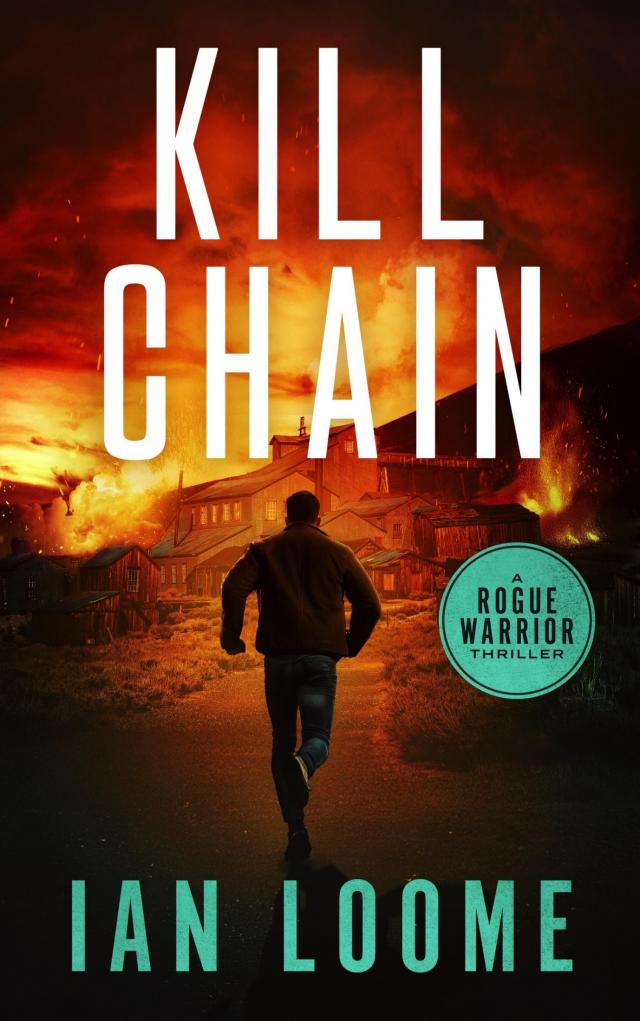


KILL CHAIN
A ROGUE WARRIOR THRILLER
IAN LOOME
Published by Inkubator Books
www.inkubatorbooks.com
Copyright © 2025 by Ian Loome
Ian Loome has asserted his right to be identified as the author of this work.
ISBN (eBook): 978-1-83756-658-7
ISBN (Paperback): 978-1-83756-659-4
ISBN (Hardback): 978-1-83756-660-0
KILL CHAIN is a work of fiction. People, places, events, and situations are the product of the author’s imagination. Any resemblance to actual persons, living or dead is entirely coincidental.
No part of this book may be reproduced, stored in any retrieval system, or transmitted by any means without the prior written permission of the publisher.
CONTENTS
Inkubator Books
Chapter 1
Chapter 2
Chapter 3
Chapter 4
Chapter 5
Chapter 6
Chapter 7
Chapter 8
Chapter 9
Chapter 10
Chapter 11
Chapter 12
Chapter 13
Chapter 14
Chapter 15
Chapter 16
Chapter 17
Chapter 18
Chapter 19
Chapter 20
Chapter 21
Chapter 22
Chapter 23
Chapter 24
Chapter 25
Chapter 26
Chapter 27
Chapter 28
Chapter 29
Chapter 30
Chapter 31
Chapter 32
Chapter 33
Chapter 34
Chapter 35
Chapter 36
Chapter 37
Chapter 38
Chapter 39
Inkubator Newsletter
About the Author
Also by Ian Loome
JOIN THE INKUBATOR MAILING LIST
You will be the first to learn about new releases plus the many FREE and discounted Kindle books we offer!
bit.ly/3tpZe28
1
DESERT AIRE, WASHINGTON
Bob Singleton stood at the entrance to the parking lot and leaned out towards the highway, thumb outstretched.
The Double-Q truck stop had been a welcome break from trudging alongside State Route 420, trying to hitch a ride. The place had been mostly empty, just a couple of long-haul eighteen-wheeler drivers nursing coffee and a late breakfast, watching the minutes tick by on an old Miller High Life clock behind the long counter.
But it was time to get moving again.
He hadn’t hitched in years, but his finances were low; getting a new driver’s license good enough to fool authorities was out of his price range, which meant driving a beater was a continual risk. And the types of rebuilt wrecks he could afford generally got pulled over, just in case.
Money was a problem, to be sure. Ever since returning from Canada, he’d told himself that he was going to make it less so by staying out of trouble. The big bills always went on equipment, bribes, and bailing people out of trouble.
So, for a while, I’m going to avoid all that. A nice regular gig, no stressors, no action, no need for notoriety and serious cash bailouts.
Another car zipped by, its tires kicking up the fine brown topsoil, the road flanked by fields of what looked like olive groves. He’d left Portland, Oregon, nearly two days prior, buoyed by the knowledge there might be farm work near Royal City, just four and a bit hours northeast.
But the going had been slow. Hitchhiking had been given up by most folk, as it was too dangerous, and that most certainly included the drivers. He looked presentable enough, he figured, in a white golf shirt, jeans, hikers and his ball cap.
He’d planned to sleep under some bushes on his bedroll but had been tempted by the cheap room rates at a local motel in Richland. The room was unkempt, the bed possibly bug infested, the water tap producing slime. They’d been evicting a monthly tenant when he arrived, a guy who looked like he was more accustomed to sleeping rough. In the end, Bob had slept sitting up in a chair with his feet on its partner, wondering if the bush wouldn’t have been preferable.
Bob kept one thumb out and used his other hand to take another sip of his green tea.
It had been two months since the death of one former boss at the CIA and his face-off with another. So far, if a truce was in place, it was holding, with not so much as a sign anyone was trying to keep tabs on him. The trek to Oregon had seemed like a good way to be sure; the more rural and work-oriented the place, the more likely anyone from out of town was to stick out.
Either he’d notice them, or they’d notice him. Either way, he’d know whether he could finally stop watching his back twenty-four seven.
But it had been difficult in the city, constant requests for papers he didn’t have, employers there seemingly more careful about whom they hired, even for labor.
A truck slowed down.
No turn signal. So maybe they’re not here for the coffee. Here’ s hoping…
At the last second, the truck took a hard right into the truck stop lot, its back end sliding out on the gravel verge, pebbles spraying Bob, who covered his face for protection.
He could hear youthful laughing as the driver hit the gas for a quick burst into the lot.
The truck pulled over next to the Double-Q, forty feet away.
Four young men piled out. Bob gave them a dour stare.
One of them, the shortest, in a denim jacket and ball cap, nodded his way. He strolled ten feet towards Bob. “Maybe you oughta stop hitching, like a piece-of-shit drifter. Or… you know, maybe duck,” he suggested.
The other boys laughed.
Bob shot them a wan smile for about a half-second.
The short one pulled at the brim of his AC Delco cap, unkempt straw-blond hair poking out. He scowled. “You think that’s funny, mister?” he said, his mood shifting instantly from happy-go-lucky to nasty.
Ah, hell. Short-guy syndrome, Bob thought. There was no one more irritating in a small town than the local mad dog with short-guy syndrome. Always looking to prove something to someone who just doesn’t give a damn. Always a powder keg. He wondered in that brief moment how many times the others had had to back this dude up in fights of which they wanted no part.
Bob ignored him and turned towards the road, sticking out his thumb once more.
“HEY! I was talking to you, you motherf—”
One of his bigger friends gave him a cuff to the head. “Geez, Jimmy, y’all know you need to shut the hell up, right?”
He redirected his angry friend towards the truck stop doors.
May as well start walking, Bob figured. No one stopping here that isn’t stopping here. The plates in the parking lot were all from Washington State. By his estimate, Mattawa – another small town cut out of the vast Columbia Basin desert – was about thirteen miles down the road, or about four hours’ walk.
He imagined it was probably like Desert Aire, a sudden patch of emerald green in the middle of hundreds of miles of scrub brush, coulees, and stark rock plateaus. Both communities serviced the apple orchards and vineyards fed by irrigation diversion from the nearby Columbia River.
The roadside was gritty under his New Balance hikers. It was unearthly quiet along the route. He knew from the maps that the dark green orchards were deceptive. A few miles past them, the fields gave way to desert again – technically “shrub steppes,” a Richland local had insisted – until near a town; no cicadas or hawk calls or bullfrogs chirping, just the odd screech from a buzzard, the occasional pickup truck whizzing by, wind gusts blowing around dust and tumbleweeds.
But here, near the communities and the road to marketplaces that could use their produce, the irrigation project decades earlier had created oases of fruit and veg, the sun beating down, temperatures near 95F by nine in the morning.
He heard an engine and turned. A dark-colored pickup truck crested the horizon. Even on the asphalt, there was enough dust to create a low, cloudy contrail behind it. He worried for a moment that maybe the local troublemakers had changed their minds about getting a bite to eat.
Nonetheless, riding beat walking. He stuck his thumb out again and hoped for better odds.
Sure enough, the truck was bigger, flashier, a half-ton of muscle in jet black with a big diesel engine.
It roared by, the driver gunning the motor, letting Bob know just how jacked his vehicle was. The side windows were tinted just enough that he couldn’t make them out.
Swell.
A moment later, it was gone.
Bob tried not to judge. Big guy, middled-aged, carrying a traveling bag. I probably wouldn’t pick me up either, he decided.
And he wanted beef with no man, not now. Not after three years of running, hiding and fighting. He was done being everyone’s punching bag. He’d helped where he could, done what he could to make up for his awful past. Now, he needed a break: a steady, regular job, a normal life. He was wrapping his head around the general concept of not giving a damn.
A cricket alit on Bob’s toe. He stopped and waited for it to jump off. It took its time, clearly unthreatened by his presence. It hopped off, and he resumed walking.
Grant County made sense precisely because it was the kind of place where so little happened that even the crickets couldnâ
But Washington State had a new minimum-wage law, which meant the pay was okay. And it attracted illegal migrant workers, which meant questions weren’t generally asked. The towns were often isolated, thirty minutes or more of driving between them, nothing but desert buttes and plateaus on the horizon, the sandy basin of a long-dead ancient sea their only company.
The farms came with another big plus: the amount of outdoor exercise was considerable, and the people doing it nothing if not interesting. Sometimes, that was because they came from a different country, sometimes a different walk of life; other times, it was because of the length of their rap sheet or tours overseas in the military.
After a few miles, Bob looked back over his shoulder, towards the hazy outline of Desert Aire. He hadn’t seen but the one truck. It was clear neither town had more than a few thousand residents. He had plenty of water, a bedroll and a waterproof tarp to build a lean-to if needed for shade.
But… this could be a long walk. He looked up at the sun, glad for the Ray-Ban aviators, factor 100 sunblock and the Kansas City Chiefs ball cap he’d picked up two months earlier. To a longtime Detroit Lions fan, it felt slightly sacrilegious. But it offered at least a shred of anonymity. It was always a problem with traveling rough, the sun. It was the tourist’s friend, but potentially deadly to a man stuck without shade for mile upon mile.
He heard a slight uptick in the amount of wind rushing behind him. Bob turned but kept walking, backwards, sticking his thumb out once again.
This time, the pickup was older, a massive squared-off beast from the nineteen seventies. A heat haze rose off the road behind it. It began to slow, pulling over towards him, its big tires biting into the road’s soft shoulder.
Early ’70s Chevy K20, I figure. Nice.
Bob walked over to the front passenger window, which was already down.
“Y’all need a ride into Mattawa?” The driver was young and pretty, maybe in her early twenties. She had short, strawberry blonde hair and leaned on the wheel with one elbow as she looked across the second seat. “It ain’t getting any cooler out here.”
Bob nodded and smiled. “Thank you, that’s very nice of you. I’m actually trying to get north, to Royal City.” He opened the door and put his soft-sided bag on the seat, then climbed in. He offered her a hand to shake, then looked in the rearview mirror, immediately drawn to check their six for any more traffic. “Bob Smith. I was beginning to think no one would stop. I tried waiting at the Double-Q for a while.”
“Uh-huh. Truck stops are always less friendly in real life than in country music videos.” Her accent dropped the “o”, so it came out as “vidyas.” It seemed the nature of the west, Bob thought, to be home to Americans from a little bit of everywhere.
She returned his handshake. “Juno Grady, and I’m pleased to make your acquaintance, Bob. Your tone and attire suggest to me you’re a visitor from the east. Would that be correct?”
“You would. It’s that obvious?”
“Well, sir,” she said, putting the truck into park for a moment, idling on the verge, “it’s not that you look odd or nothing, just neatly put together. Clean jeans, clean sneakers, plain white golf shirt. You look like a store manager or pharmacist on his day off. What my Granny Sue used to call ‘That JC Penney look.’ So you ain’t local. Could’ve stood at the Double-Q for three days without one of them miserable so-and-so’s giving you a ride.”
She put the truck into gear and pulled out onto the road. Its three-hundred-and-seven-cubic-inch V8 slowly growled its way up to traffic speeds. She noticed him staring at the speedometer. “Heh! And this is a rebuilt version of their high-torque block, so this is the FAST version, zero to sixty sometime before a person graduates high school.”
Bob nodded and smiled. He checked the rearview mirror for the second time out of habit. “I’ve been in a few K20s over the years. Good, reliable truck, but it was never going to win Indy.”
She chucked and slapped the wheel. “Hah! No, sir, no, it most assuredly will not.”
Bob checked the rearview again, then chastised himself internally. Come on, Bobby, give it a rest. It’s been—
He held the thought, a blip appearing in the rearview.
Well back, but…
Are they closing on us? Too far to tell. “You get a lot of high-flyers on this road?” he asked.
“Hmm? High… Oh! You mean speeders?”
“Uh-huh.”
“Yeah… well, things are pretty simple around here. Uncomplicated. Sometimes, driving around like a maniac on the weekend is about all some younger kids think they have. Most go to work on the farms or down in Richland. Me, I went to Spokane for art history and a minor in philosophy – though I’m slinging drinks in a bar right now. So I am seen as something of an oddball outlier.”
“You don’t say.” The chirpy, cheerful demeanor alone probably would’ve qualified her, from what he’d seen of the county so far. The folk in Richland had seemed pensive, like something was perpetually simmering under the surface.
Bob sipped his tea, taking an occasional glance back to see how much bigger the black dot was. After they’d gone a couple of miles, Juno turned his way quickly, giving him a hard stare before snapping her attention back to the road.
“So… how come you ain’t asked me the same question every rider I ever picked up asked me?” she asked. Bob noticed she was gripping the wheel a little tighter.
“Which is?”
“How come I think it’s safe to pick up a strange, grown man in the middle of nowhere all by my lonesome.”
Bob swallowed some more tea, lamenting that it had gone cold. He shrugged. “Well, you’re clearly not an idiot. And in my experience, when someone isn’t an idiot or a hothead, if they’re taking on risk, it’s because they’ve prepared themselves for contingencies.”
“Uh-huh. Just like that.”
“Pretty much. If I’m going to be respectful of your intelligence, I’m not going to ask a question with a pretty obvious answer.”
She nodded a few times, clearly pleased with the response. She leaned in on the wheel a little. “Yeah! Well, now, that’s kind of nice to hear, Bob, if I’m being real straight with you. And the answer is a stun gun, bear spray and a shotgun under the bench seat. Although, I don’t think I saw any shells in there, so unless it’s loaded, that might not be much help.” She glanced his way again. “It’s my daddy’s truck.” Then she added, “And he’d do even worse things to anyone who laid even a finger on me.”
“Shouldn’t be required. Taser me, bear spray me, that’ll be enough to put me down.”
Juno chuckled. Then she frowned a little, attention off the road for just a moment. “Not too many around here would agree with the intelligent part, evidently. My folks, they want me to stay here, take over their farm-supply business. But all I ever wanted—”
Bob raised a palm in her general direction. “Shhh! Just a sec!” he said, his concentration back on the vehicle behind them.
“Well now, that is just darn rude!” Juno’s irritation was clear. “You go say a nice thing—”
“There’s a truck coming up quickly behind us,” Bob interrupted. “Like, really quickly.”
2
Juno looked in the rearview mirror. Her irritation turned briefly to curiosity, then another frown. “Ah, dang it!”
“You know who that is?”
“I could. You didn’t perchance see a group of idiots back at the Double-Q, maybe a bit on the belligerent side?”
“I did, yeah. One of them had a big chip on his wee shoulder.”
“Short little guy with straw-blond hair? Thinks that thing on his lip is a mustache?”
“That would be the one.”
“Ah, dang. That’s Jimmy Bowman. He’s quite the little creep, but he’s been hot after me since we were both knee-high. They work on a crew during the week at Hanford, doing grunt work…”
“Hanford?”
“That’s the former nuclear reactor in the desert, north of Richland. That’s why they’ve got all that cheesy ‘Atomic Age’ branding all over town, and the street names and such. Government made the plutonium for the bombs dropped on Japan there and have been trying to clean it up ever since. Anyway, when they’re not delivering stuff to and from the site, they’re drinking and causing fights. Jimmy’s been done for assault a few times, but his uncle’s a county judge, so he never does get real jail time.”