

Project fire, p.1
Project Fire, page 1
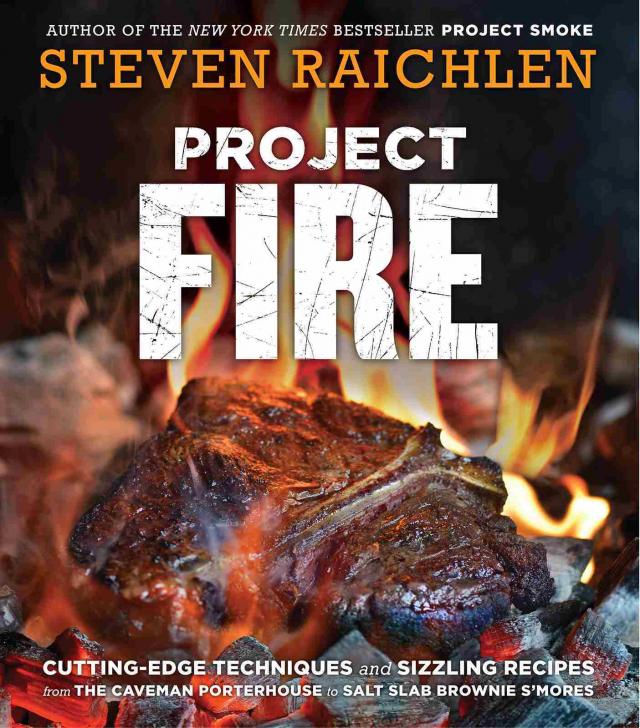


Cutting-Edge Techniques and Sizzling Recipes from
the Caveman Porterhouse to Salt Slab Brownie S’Mores
STEVEN RAICHLEN
Food Photography by Matthew Benson
Workman Publishing
New York
In loving memory of my father
Sonny Raichlen
1929–2016
ACKNOWLEDGMENTS
Project Fire is my 31st book, and, as always, one of the great pleasures in completing it is thanking the people who helped make it possible.
But this time that pleasure is tempered with sadness, for it is my last book with my longtime editor and friend, Suzanne Rafer. For 43 years, Suzanne has polished the prose of her authors at Workman Publishing, turning their books into international bestsellers. I thank her for her expert editing, unerring counsel, and relentless pursuit of excellence. I wish her well in her retirement and will never forget how hard she has worked to make my books worthy of the name Workman Publishing on the spine.
Equally heartfelt are my thanks to my assistant, Nancy Loseke, who handles any task I throw at her—from research to recipe testing to proofreading, editing, and blogging—with an aplomb surpassed only by her enthusiasm and dedication.
The idea for Project Fire originated on the set of my Project Smoke TV show, so it’s only fitting that I thank Matt Cohen, Gwenn Williams, Chris Lynch, Richard Dallett, and the many cameramen, engineers, editors, chefs, and PAs who make it possible. (That would be Bob, Dan, Dave, David, Emily, Haley, Jacob, Jillian, Joe, John, Jonathan, Jordan, Joseph, Kevin, Lauren, Michael, Paul, Rob, Ryan, Tony, and Vicki). Tip o’ the hat to Steven Schupak, Stuart Kazanow, Frank Batavick, Jay Parikh, Phillip Guthrie, and Donna Hunt at Maryland Public Television.
When it came time for the photography for Project Fire, I had the great fortune to work again with photographer Matthew Benson, food stylist Nora Singley, and her assistants Kris Kurek and Pearl Jones, photo director Anne Kerman, prop stylist Sara Abalan, and fire wranglers Ezra Dunn (Stokey) and Garlan Dunn (Smokey).
Providing grill gear and product photos were: Arteflame, Carson Rodizio, Char-Broil, The Companion Group, Grillworks, Homdoor, Kalamazoo, Komodo Kamado, Lodge, Matsushima, Maverick, Memphis Grills, Pit Barrel Cooker Co., Safecid, Smoke ’n’ Fire Inc., TEC Infrared Grills, and Weber.
Thanks, too, to Francois de Melogue (Foods in Season) and The Green Grape Provisions.
Becky Terhune designed this handsome book. Kate Karol, Carol White, Lily Kiralla, and Barbara Peragine ushered it into production, and publicity director Rebecca Carlyle and head publicist Chloe Puton will make sure people know about it. I will miss former publicity director Selina Meere, and wish her well in California. Molly Kay Upton, Erin Kibby, and Moira Kerrigan keep the barbecuebible.com website humming. (Sign up for our Up in Smoke newsletter if you haven’t already.) Orchestrating all this are CEO Dan Reynolds, publisher Suzie Bolotin, and Workman’s president, Carolan Workman. I only wish that the visionary Peter Workman were still alive to see another Raichlen book join the Workman library.
A HUGE thanks to my family: Betsy, Jake, those three rascals, Ella, Mia, and Julian, and above all, my wife of 28 years, Barbara Raichlen. Consigliere and best friend, Barbara has a hand in all the good things that happen to me, and believe me, keeping me on track is no easy task.
Last, but certainly not least, I would like to thank you, dear readers, for allowing me to have the greatest job on the planet. Thanks to you, I look forward to each new day, with all the new adventures and discoveries it brings.
Steven Raichlen
Contents
ACKNOWLEDGMENTS
Introduction
Chapter 1: The Seven Steps to Grilling Nirvana
Chapter 2: Breakfast On the Grill
Grilled Bacon
Candied Bacon
Bacon and Egg Quesadilla
Grilled Eggs
Breakfast “Burgers”
Chapter 3: Starters
Ember Salsa with Chive-Grilled Tortilla Chips
Chorizo-Grilled Dates
Red Curry Crab Poppers
Grilled Padron Peppers
Greek Grilled Cheese (Halloumi, Honey, and Mint)
Planked Figs with Taleggio Cheese and Speck
Buffalo Brussels Sprouts
Sesame Soy Chicken Wings
Bacon-Grilled Onion Rings
Chapter 4: Breads and Pizzas
Bruschetta Four Ways
Texas Toast
Tartines and Company
Honey Beer Pizza Dough
Pizza Stone Pizza
Grilled Pizza, Really, with Potatoes, Broccolini, and Italian Sausage
Chapter 5: Salad Hits The Grill
Grilled Wedge Salad with Smoked Blue Cheese Dressing
Ember-Roasted Vegetable Salad
Grilled Watermelon Salad with Arugula and Queso Fresco
Ember-Roasted Beet Salad
Grilled BLT Salad
Peruvian Potato Salad
Grilled Pineapple and Shrimp Salad
Grilled Asparagus and Corn Salad
Chapter 6: BEEF
First-Timer’s T-Bones
Reverse-Seared Tomahawk Steaks
Dry-Brined Peppered Filets Mignons
Hanger Steaks with Mustard and Caramelized Onion Sauce
Caveman Porterhouse with Pepper Hash
Rotisserie Prime Rib with Horseradish Cream
The Raichlen “Cheesesteak”
Coffee-Crusted Beef Short Ribs
Bool Kogi Beef Kebabs
Rosemary-Smoked Veal Chops
Chapter 7: PORK
First-Timer’s Pork Shoulder
Pork Loin “Reuben”
Pork Tenderloin Teriyaki
Porchetta Pork Chops
Pork Belly Steamed Buns
Black Pepper Baby Backs
The 3-2-1 Rib Sandwich
“Swine-Apple” Kebabs
Lemongrass Pork Bites
Chapter 8: LAMB
Leg Of Lamb
Asian-Flavored Lamb Shoulder
Grilled Lamb Steaks
Lamb Chop Hot Pops
North African Lamb Kebabs
Chapter 9: Ground Meat
Triple Steak Burgers
Italian Cheeseburgers
Lamb Burgers
Mile-Long Italian
Hedgehog Hot Dogs
Chapter 10: POULTRY
Rotisserie Chicken
Peruvian Grilled Chicken
Chicken Breasts Grilled Under A Salt Brick with Mediterranean Salsa
Grilled Chicken Breasts
Smoke-Roasted Game Hens with Kentucky Fire Dip
Chinatown Chicken Thighs
Maple-Sriracha Chicken Drumsticks
Yakitori
Plancha-Grilled Duck Breasts
Bourbon-Brined Smoked Turkey Breast
The Raichlen Butter Bird
Chapter 11: SEAFOOD
Grilled Oysters
Grilled Clams with Linguiça and Peppers
Hay-Grilled Mussels with Charcoal Butter
Shrimp Times Two
Caveman Lobster with Absinthe Butter
Salmon Steaks on a Shovel
Wood-Grilled Swordfish with Butter-Fried Olives
Albacore Tuna “Filets Mignons” with Peppercorn Cream Sauce
Cedar-Planked Striped Bass with Miso Glaze
Grill Basket Halibut with Maple Teriyaki
Salt Slab-Grilled Rockfish with Mango Mint Salsa
Sardines Grilled in Grape Leaves with Tomato Olive Salsa/Lemon Sesame Sauce
Bacon-Grilled Trout with Fennel Orange Salad
Chapter 12: VEGGIES AND TOFU
Chive-Grilled Artichokes
Caveman Cabbage
Smoke-Roasted Carrots with Spice-Scented Yogurt
Rotisserie Cauliflower
Chiles Rellenos
Coconut-Grilled Corn
Thai Grilled Kale
Mushroom Mixed Grill
Sweet And Sour Grilled Onions
Smoke-Roasted Potatoes
Hasselback Potatoes
Ember-Grilled Sugar Snap Peas with Fresh Mint
Salt Slab Squash
Tofu Steaks
Chapter 13: DESSERTS AND DRINKS
Cinnamon-Grilled Peaches
Amaretti Planked Pears
Dessert “Steak” Sandwich
Grilled “Pina Colada”
Mango Macadamia Crisp
Grilled Pound Cake
Dessert Quesadillas
Salt Slab Chocolate Brownie S’mores
Grilled Sangria
Grilled Peach Bellinis
Conversion Tables
About the Author
Introduction
WHY PROJECT FIRE?
After thirty books, seven TV series, two decades of Barbecue University classes, hundreds of articles in publications ranging from the New York Times to Esquire, and literally thousands of radio and TV interviews, what more could I possibly have to say about grilling?
As it turns out, a lot.
When How to Grill came out in 2002, few people understood such fundamentals as indirect grilling or smoking. Today grillers debate the intricacies of dry brines and reverse-searing, of salt slab grilling and sous vide the way scientists argue the fine points of quantum physics.
Which is to say that like all else in cuisine and culture, grilling continues to evolve. Never in history have more people grilled a more diverse repertory of foods on a more sophisticated array of grills and cookers. Never have people used a wider range of grilling and smoking techniques to derive more pleasure from the ancient art of live-fire cooking. Men do it. Women do it. These days, even kids compete in barbecue competitions.
So what’s new in Project Fire? Just about everything.
• New grills, from kamados to pellet grills, from plancha grills to hybrid wood burners.
• New tools, from remote digital thermometers to high-tech rotisseries.
• Revolutionary new techniques, from salt slab grilling to smoke-roasting, from ember-grilling to fire-heated iron.
• And of course, new foods, from alternative steaks to eco-friendly seafood, and new twists on popular classics, such as breakfast on the grill and wood-fired desserts.
Think of Project Fire as the companion to Project Smoke— my book on smoking—picking up where my previous books leave off. You have some killer grill sessions to look forward to.
The Seven Steps to Grilling Nirvana
Grilling is the world’s oldest and most universal cooking method, practiced in virtually every country and culture on six continents (seven if you consider the cookouts staged by grill-obsessed scientists in Antarctica). But ancient and universal don’t automatically mean simple.
Today’s grillers face a staggering selection of grills, from inexpensive hibachis to $20,000 supergrills. As for grilling accessories, the indispensable tongs and grill brushes are now joined by sophisticated digital thermometers and temperature controllers that communicate with your smartphone.
The once ubiquitous briquette has given way to specialty charcoals from as far away as Paraguay, Japan, and Indonesia. Then there’s wood—used for adding a smoke flavor and as a grilling fuel in its own right. Which wood you use and how you add it has an enormous impact on the flavor of your food.
If you think grilling means searing a steak or burger over a hot fire, know that there are actually five different grilling methods—each with its own unique cooking properties for an equally unique roster of foods. And that’s before you get to specialized grilling techniques, such as plancha grilling and rotisserie smoking.
Of course, you need to know about the rubs, marinades, brines, bastes, glazes, and other flavorings that transform simple grilled foods into live-fire masterpieces. How and when to apply them does much to determine the ultimate deliciousness of your final dish.
Finally, you need to know how to manage the food on the grill and cook it to the desired degree of doneness. When to take it off the grill and how to carve and serve it. How to clean and maintain your grill so it’s ready for the next grill session. And some basic safety practices to keep you and your guests coming back for more.
In other words, there’s a lot more to grilling than throwing that steak or chop on the grill.
Don’t worry: I’ve got you covered. In the following pages, I’ll walk you through the Seven Steps to Grilling Nirvana. Along the way, you’ll get a refresher course on the basics and learn the new techniques and technologies needed to make you a grilling force of nature.
And now, ladies and gentlemen, fire up your grills!
Step 1
Choose Your Grill
“Which grill should I buy?” is one of the questions I hear most. I wish I could give you a one-size-fits-all answer. I can’t. A charcoal kettle grill offers great versatility (it’s suitable for all five grilling methods). But a convenience-minded gas griller or diehard wood griller wants a different sort of live-fire experience. Here are the basic types of grills. Smoker grills are discussed in this book; straight smokers are covered in my book Project Smoke.
Charcoal Grills
Charcoal grills use lump charcoal or briquettes as their primary fuel. (Some come with a propane igniter to light the charcoal.) If you love the sport of grilling—building and maintaining a fire, waltzing foods from hot spots to cooler spots—a charcoal grill is for you. Charcoal grills burn hot (up to 800°F), which is great for direct grilling, and many are well suited to indirect grilling and smoking. They tend to be less expensive and more portable than gas grills and take up less room on your patio.
Kettle grill: The charcoal kettle is a near-perfect grill. Simple to use for beginners, it’s sufficiently powerful and versatile to handle just about any food you want to grill. Works for all methods of live-fire cooking.
Front-loading charcoal grill: Modeled on the mangal grills used across so much of Planet Barbecue, the front-loader is a rectangular metal box with a door in the front through which you can add charcoal, wood chunks, and logs. Suitable for direct and indirect grilling and smoking.
Hibachi: Born in Japan (like me!), hibachi-style grills are used throughout Asia. Imagine a small metal (or, in some cases, stone) shoebox-like firebox with sliding vents at the bottom for heat control and a grate on top for the food. Designed for direct grilling.
Table grill: Put a large shallow rectangular metal box with a grate on legs and you’ve got a table grill. Some models (especially those sold or rented in Greek neighborhoods) come with rotisseries. Some models burn gas instead of charcoal. Designed for direct grilling.
Kamado-style (ceramic) grill: A large, egg-shaped ceramic grill/cooker originally from Japan—the first one being the popular Big Green Egg. Today, dozens of manufacturers make these versatile grills: most ceramic, a few metal (like the Weber Summit), others gorgeously decorated with mosaic tiles (like the Komodo Kamado). All have great thermodynamics thanks to their thick ceramic walls (or in some cases, insulated metal) and hyper-efficient venting: They cook low and slow (at 225°F for smoking), hot and fiery (700°F for direct grilling), and everywhere in between.
Grilling hack: Kamado-style grills burn extremely efficiently, using very little oxygen during the cook. So sometimes when you open them, air rushes in, erupting in a potentially dangerous burst of flame called a flashback. To avoid this, “burp” the cooker, that is, open the lid just a little a few times to bring air into the cook chamber before opening it all the way.
What to Look for When Buying a Gas Grill
There are hundreds of different gas grill models. So which is the right one for you? Price is a major factor and so are size, construction, and the warranty. Here’s what to look for:
1. Burners: You want at least two burners (so you can shut one off for indirect grilling), preferably three or four. In inexpensive gas grills, the burner tubes are made from a cheap stamped metal alloy—often in a single piece shaped like an H. They burn and rust out in a couple of years. In better gas grills, the burner tubes are made of stainless steel or brass, one tube per burner. They last longer and burn better.
2. Igniters: Many gas grills have a battery-powered igniter that produces an audible click and a spark. Higher-end grills, like the Weber Summit, build the igniter right into the burner control knob. (Weber also has a Snap-Jet individual burner ignition system that gives you a whoosh of flame as each burner ignites—visual confirmation that the burner is actually lit.)
3. Grate: The place where you do the actual grilling. (In fact, our word grill comes from the Latin craticula, “gridiron.”) There are various types of grill grates; my personal preference is cast-iron grates with ¼-inch bars—these give you the best grill marks.
Grill grates and more, from top left clockwise: plancha; hinged grate for charcoal grill; Tuscan grill grate with legs; stainless steel gas grill grate; laser cut stainless steel grate for seafood.
4. Grease collection system: Ducks or pork shoulders put out a lot of fat as they grill, and you want that grease funneled to and collected in a deep receptacle that’s easy to access and empty. Beware of the large flat, shallow metal trays (some only ¼ inch deep) that come with some high-end gas grills; they’re murder to empty.
5. Side burners: Useful for warming sauces, pan- and deep-frying, etc. I use my grill’s side burner when I want to keep the spattering fat outside.






