The electric, p.1
The Electric, page 1
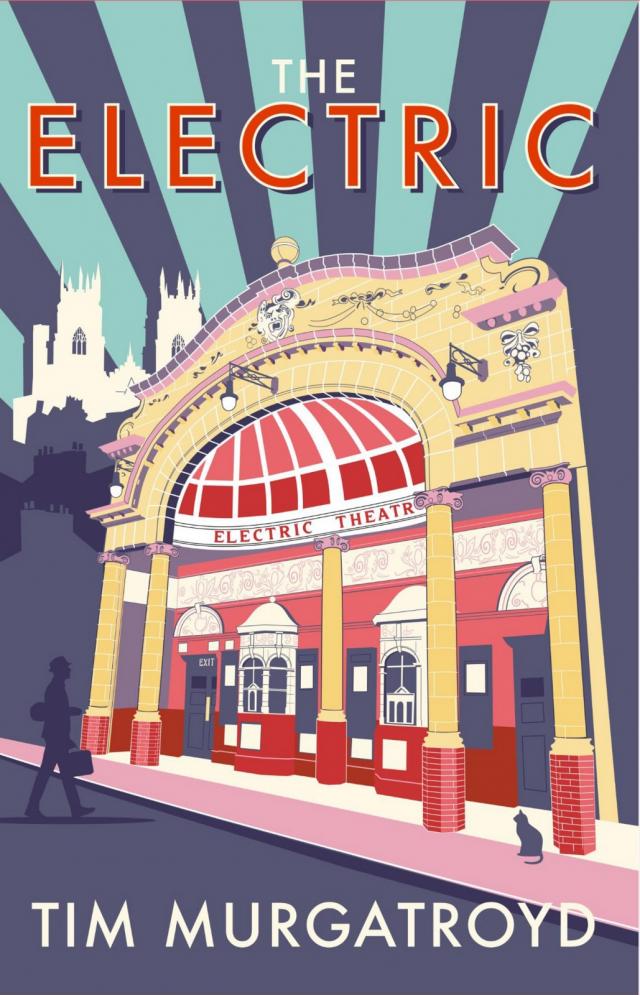


The Electric
a novel
by
Tim Murgatroyd
Published by Stairwell Books
161 Lowther Street
York, YO31 7LZ
www.stairwellbooks.co.uk
@stairwellbooks
The Electric © 2022 Tim Murgatroyd and Stairwell Books
All rights reserved. No part of this publication may be reproduced, stored in or introduced into a retrieval system, or transmitted, in any form, or by any means (electronic, mechanical, photocopying, recording, e-book or otherwise) without the prior written permission of the author.
The moral rights of the author have been asserted.
This is a work of fiction. Names, characters, businesses, places, events, locales, and incidents are either the products of the author's imagination or used in a fictitious manner. Any resemblance to actual persons, living or dead, or actual events is purely coincidental.
Layout design: Alan Gillott
Cover design: Elliot Harrison
Paperback ISBN: 978-1-913432-43-0
eBook ISBN: 978-1-913432-53-9
p9
Also by Tim Murgatroyd
China Trilogy:
Taming Poison Dragons
Breaking Bamboo
The Mandate of Heaven
The Nazi’s Daughter
Pilgrim Trilogy:
Pilgrim Tale
Pilgrim Lost
Pilgrim City
For William Lea
A thing of beauty is a joy for ever:
Its loveliness increases; it will never
Pass into nothingness; but still will keep
A bower quiet for us, and a sleep
Full of sweet dreams, and health, and quiet breathing.
John Keats
Summer, 1969
Clifton jumps up onto the rail of the balcony. With a sharp intake of breath, I imagine his little body tumbling four storeys to the basement flagstones below. Or impaling himself on the iron railings. A puff of ginger fur, outstretched legs. He’d need more than nine lives to survive that crash.
I sidle over to where he licks an insouciant leg, defying the void, and scoop him in my arms. There. Safe for now. Stupid cat.
Don’t ask why we called him Clifton. Another long story. At my age, you burst with stories like an overstuffed cushion.
The view from the balcony halts me. I stand with him in my arms, looking up the Thames towards Chelsea Bridge. A haze of fumes and summer twilight lies sleepy across London. Only a few cars and buses pass along Chelsea Embankment, directly below our balcony. The day is fading into something else, always something new. Even as I watch, the streetlamps glow in anticipation of a warm, breathless night.
A young couple walk by on the riverside pavement. She wears a flowery skirt so short it might pass for a tea towel; the flares of his purple and orange trousers are wide as a Mexican bandit’s chaps. Her head rests on his shoulder: they are draping one another with desire. An unworthy rush of envy and hot grief for the past troubles my heart.
The low wall of the embankment leads to the slow Thames, running full tonight. It must be high tide on the coast. Across its boat-littered waters the trees of Battersea Park are in full leaf. Perhaps the young lovers will walk there tomorrow. Their story lies all before them, flowing away to unimaginable seas.
Despite my quickened heartbeat, I sense rightness in the world. All the elements are present and correct. Always have been, world without end. Air and water, earth and fire. Plus a fifth, sparking through living veins. I think of it as the electric.
What does the old fool mean, you probably ask, suspecting a half full whisky bottle. Only that he, too, once was young. That he, too, played youth’s game for the highest stakes. That he faced scrambles to gain a niche: home and a steady income, children to reward and mock parental genes. Above all, to be vivified by that current like lightning or blue static. The St Elmo’s Fire of loving. And being loved in return.
The heart has its own truths. Like music. Which is why I wish to sail back up the river of my memories, while I still can. Back to the source of my best shot at life, a miraculous chance I never anticipated, or perhaps deserved.
Clifton flows like quicksilver out of my arms and mooches to the sofa. I hover on the thick burgundy carpet before a Victorian marble fireplace carved with grapes on the vine. Its shape reminds me of the Electric’s proscenium arch, the glowing silver screen it framed.
I dare myself to ignore the easy chair where drowsing is seductive, where the newspaper headline calls me, predicting Apollo 11’s landing on the moon. I dare myself to switch off the television’s gabble and offstage laughter, to settle at the table with its prospect of the river, the lights of the glimmering city.
I dare myself to uncap my old green, lacquered fountain pen, veteran of many a musical score and composition. Then the Electric might glow for me, one last time.
Winter, 1919
One
Bitter winds chased us inland and pursued us up the Ouse, from Goole to Selby, through a landscape grey with frost and fog. A long, slow haul. The steam barge’s flat belly was laden with cocoa beans for Rowntree’s chocolate factory in York.
The skipper and his crew ignored me, other than to indicate I should ‘mash us some tea, lad’. Tea was necessary for a little warmth, even when the wind dropped and the sky darkened, charged with that expectant inner light you get before snow.
As dusk thickened, we turned a bend in the river. It began to snow. Heavy, soft, delicate flakes floating down like a cloud of airy white seeds.
The chug and huff of the barge’s pistons faded from my ears. All fatigue of body and heart left me. I experienced a strange feeling. That amidst our steady advance up the river and the flickering, constant motion of the snow, I had found a doorway.
People on the riverbank seemed ghostly as the flakes drifting down. Street lamps and the headlights of a motor truck lent glamour to the snow.
My reverie was broken by the skipper at his tiller.
‘It won’t last,’ he predicted, indicating the sky with an upraised palm like Jesus. ‘Wet snow this. Not the settlin’ kind.’
I blinked at him, crystals melting on my eyelashes. The spell broke. Again we were in winter, entering a city of smoky, stinking factories, shops and narrow terrace streets. Many were little better than slums. Again I was poor and hungry, lost in the world. But that snow, wet or dry, had washed a tiny corner of war from my soul. I sensed it. What began with a small corner might spread across the whole room.
The skipper offered me a berth in the barge’s tiny cabin with the other lads – it was late, after all – but I asked him to drop me off. We bumped to a halt beside a cobbled quay.
‘Thanks for the lift,’ I said.
He examined me frankly. At once, my hand twitched up, covering my left cheek. Ashamed of weakness, I lowered it.
His own fingers as we shook were black with soot and oil, a mass of calluses.
‘Tha’s got soft hands, I reckon, for my way o’ life,’ he said, not maliciously. ‘And mine are too rough for yours. Good luck to you, lad.’
I did not tell him those same soft hands – though wearing lambskin gloves to keep out the cold at five thousand feet – had cut short as many lives as I possessed years. And not in a pleasant manner. Oh no. A count haunting my dreams. Well, I was not alone in that. It wasn’t done to talk about such things. Hide them away in secret pockets of your memory like filthy rags, and hope time would launder them.
‘Thanks,’ I repeated lamely.
Then I made my way into the town, guided by two words on a torn slip of paper in my pocket: The Electric.
When you are young, you feel beyond history. The future is unresolved like dough yet to rise. Mostly, that winter twilight, I felt wretched and numb.
All your own fault, I could hear my stepfather’s pedantic tones assuring me. Like bread and history, some voices get chewed into a sour pap. His was my inner voice of nagging reproach. A dry sniff, a sigh. Next time try the train.
Except that, even Third Class costs money. Even so short a journey as Hull to York required a few shillings. As I possessed barely enough capital to patronise the cheapest tearoom, I naturally leapt at the offer of a free ride.
There is an old beggar’s saying: ‘From Hell, Hull and Halifax may Heaven preserve us.’ After the war acquainted me with the first location on the list, I had reasoned Hull must be some kind of improvement.
Besides, an old comrade-in-arms from the squadron had written – a brief, offhand reply to an enquiry of my own – about ‘cast-iron’ vacancies in my particular line of work. Driven by unemployment and daily, sometimes hourly, probing from my stepfather as to job prospects, I spent what remained of my money on a ticket from West Ealing to Hull. Mother (bless her, ever the great handwringer) had confined her maternal affections to mournfully comparing me with my dead father as I carried my suitcase out of the door.
Once in Hull, my old comrade seemed mightily surprised to see me, violin in hand, and not best pleased.
It soon became clear the ‘cast-iron’ vacancies were scrap. If they ever existed. Nothing much was in the offing apart from depping – and as any professional musician will tell you, man cannot live by depping alone.
Luckily, my pal recollected rumours of another ‘cast-iron’ vacancy. This time in York. He was also blessed with an uncle skippering a steam barge to that ancient city on the plains. As one ex-Navy man to an other, he made a large occasion of ‘doing me a favour’.
There are few more dispiriting positions than being superfluous. I was among hundreds of thousands, recently demobbed, returning changed and baffled, forbidden to speak of all they had seen and perpetrated. Home felt stranger and colder than the moon.
An hour later, fortified by tea and a buttered slice that consumed a disturbing proportion of my assets, I loitered outside the Electric Cinema for reconnaissance. Was this what I shivered the length of the Humber and Ouse to find? The Electric’s glory days had peaked even before Kaiser Bill donned his spiked helmet and invaded Belgium.
The exterior consisted of a ticket office and double doors, flanked by pillars and plaster friezes in a style between Tutankhamun’s Tomb, the Palace of Versailles and your neighbourhood bordello. Fresh paint would not have gone amiss.
A wooden sign on hooks read, Come right on in! It’s warmer inside! I later found out that in summer the same sign was reversed to read, It’s cooler inside! Another notice assured customers, These Premises are Regularly Treated with DDT.
One of the Electric’s employees returned my scrutiny. A barrel-chested man in his fifties, his face fleshy, nose bulbous and veined. He wore a burgundy uniform with canary yellow epaulets and a peaked cap. His buttons and shoes glinted with pride. The commissionaire folded his arms.
‘Tonight’s last showing is half done,’ he advised. ‘There’s another tomorrow.’ He added dryly, ‘And there’s usually one the day after that an’ all.’
‘I was hoping to see the manager about a job.’
I raised my instrument case. His manner softened.
‘Fiddle, is it?’
‘Violin.’
The commissionaire nodded sagely and waved to a thin, faded lady behind the ticket office window. Dressed in widow’s black, apart from a white maid’s hat, she was counting halfpennies, pennies and sixpences. She slid open a glass panel.
‘This young chap’s brought his fiddle, Esther,’ the doorman advised. ‘Best tell Him Indoors.’
Her glance danced round my face. Women were the worst for that, especially when pretending not to stare. First, at the dusky complexion inherited from a great grandmother who Father – my real father – had dubbed in a droll mood, ‘Nefertiti, the African Queen’. Then, inevitably, at my neck and left cheek. Well, it wasn’t as if I could expect anything else.
‘You wait ‘ere, love,’ said Esther. She had a quiet, woebegone way of talking, like the rustle of autumn leaves. ‘I shan’t be long. Mr Ackerley will keep you company, won’t you, Ambrose?’
‘I most certainly shall,’ declared the commissionaire.
She vanished in search of Him Indoors.
I felt for a cigarette, realised I was out. Ambrose regarded me regally. His jaunty peaked cap and yellow braid epaulets brought to mind cockatoos.
‘Not from round ‘ere, lad, are you?’
‘No.’
He nodded at his own perspicacity. We left it at that.
A moment later, the front doors swung open and a head popped out. It belonged to the founder, manager and sole proprietor of the Electric Cinema: Horatio Gladstone Laverelli.
The name Laverelli conjures up sun-drenched olive groves in the Apennines, rather than a drizzly Pennine mill town like Halifax. But no, Halifax it was. Laverelli’s accent and manner were West Riding as oatcakes, high teas, flat caps and ginnels.
I had done Hell. Then Hull. Now, embodied in the dapper little man before me came the third location on the beggar’s list.
Laverelli’s moist brown eyes weighed me from hat to scuffed boots. He was in his mid-forties, twice my age. The customary cinema manager’s uniform of black dinner jacket and bow tie was enhanced by shiny lapels and patent leather shoes. A mauve, perfectly folded polka dot handkerchief rose from his breast pocket. When he grinned, pearly dentures caught the electric light. His eyes crinkled at the corners.
‘Come right on in! Esther says you’re looking for a job. I reckon me and you need a powwow. Violin, is it?’
‘Fiddle,’ Ambrose the commissionaire corrected.
Mr Laverelli ignored this sally and waved me into the foyer. It was decorated in the same style as the entrance, a potpourri of pastiche. Over a long and well-travelled career, I have observed that, unlike people, you can judge a theatre or cinema by its front of house. The carpet of the Electric, worn by tramping feet and scarred by cigarette burns, told its own tale. As did a faint but lingering aroma of blocked drains.
Laverelli pointed at my violin case. ‘Experienced kind of fellah in this line?’
I nodded. He seemed to expect more, so I added, ‘Orchestra, light music and dance band mainly. Some cinema.’
‘I see.’ He looked boldly at my cheek. ‘And I can see you was out there.’
My left hand started to rise. I jerked it back down. He added smoothly, ‘Only reason I ask is you have a military bearing. A chap who’s seen his share.’
I glanced at the exit. ‘A bit.’
‘Thought so.’
He launched into a long story how his last violinist had been seduced by the fleshpots of Scarborough, leaving a sudden vacancy, and that there might, just might, be an opening at the Electric. I wasn’t really listening. Ever since the hospital I’d developed a habit of drifting into dense clouds. I suspect his question about the war triggered this episode. Nor am I really sure how long it lasted. One second, I was listening to the piano and cello seeping from the auditorium and wondering why they were playing Fletcher’s Woodland Pictures so, well, woodenly, the tempo more sedate waltz than gambolling forest sprite or pixie, then I was high over a grey sea, flak opening flowers of black smoke as we circled a German destroyer far below, and it was unnaturally quiet up there, the silence of bad dreams, no engine noise or wind or explosions from the flak, none of the world’s clashing music, just Hell, Hull and Halifax with little hope of Heaven to preserve us... ’
‘So there you have it,’ concluded Laverelli. His voice faltered. I shook my head to clear the clouds.
‘I’ll listen to the orchestra,’ I suggested, hurriedly. ‘See if I fit in.’
Laverelli clapped my shoulder. ‘Aye, lad, you do just that. You’ll find we’re all friendly here. Nothing to worry about here. And I’ll send Gladys to bring you some nuts.’ He winked. ‘You’ll like Gladys. All the chaps do.’
Leaving my suitcase with Esther in the ticket kiosk, I approached the heavy black doors to the auditorium. No doubt Laverelli and Esther exchanged curious looks behind my back. His thick, dark eyebrows might even have waggled. Laverelli was a big eyebrow waggler.
Behind me, I heard Ambrose mutter in a tone of wonder, ‘Told yer he’s not from round ‘ere.’
A black cat sat before the swing doors of the auditorium, scratching its white bib with a white paw. It examined me coldly. I made a pssshing noise to get past. The big cat yawned, did not budge.
Stepping round it, I pushed open the swing doors, entering a world where make believe is refreshingly real. Everyday reality the burden you trade for a handful of coins: the best flickering dream you can afford.
Two
The auditorium of the Electric was a one hall, six hundred-seater. Even in 1919 it was starting to look quaint. That’s how fast things moved in the picture trade back then.
It boasted a fair-sized stage with a small pit for the band. A proscenium arch with chamfered corners and plaster mouldings of grapes and fleur-de-lys surrounded the silver nitrate screen. Tiers of seats sloped down, heavily padded near the foyer, spartan close to the front. With the logic common to all superstitions, especially snobbery, seats near the front were considered ‘common’.
The air was dense with cigarette smoke. A fair-sized audience for a Wednesday evening. Well, you needed something to get you through a sixty hour week at the local factory or laundry or shop counter. Something to take your mind off husband and errant kids – every cinema’s regulars being mostly married women. That something happened to be a Western I’d watched in London two months earlier. Like the foyer, such a main feature told tales about the Electric. The print had seen several runs in plumper establishments before reaching York. You could tell from occasional flickers of light made by scratches on the delicate nitrate film.