

Returning, p.32
Returning, page 32
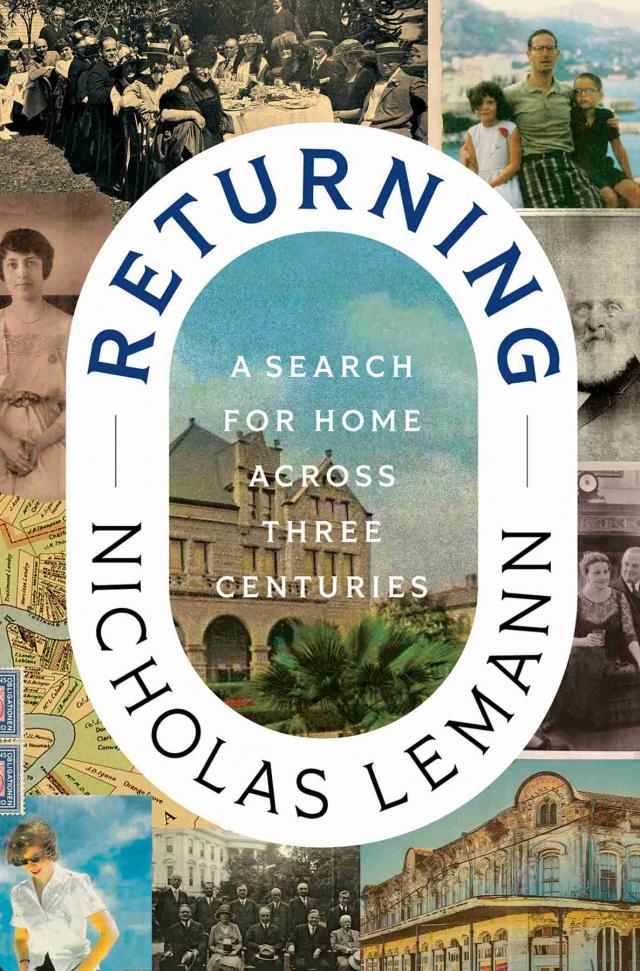


Parties are at the center of life in New Orleans—I think of them as almost living things, with their own flow and rhythm. Most of the parties where you might find me now are merely extensions of people’s worldly lives, celebrations of some achievement or attempts to raise money for a cause. Parties in New Orleans are purer, I suppose, and if they stand for something larger, it’s something social: courtship rituals or the making and breaking of other alliances. Mother, her middle-class origins a distant memory by now, would spend days preparing for her and Father’s holiday parties, hiring extra servants, ordering hors d’oeuvres from caterers, writing out elaborate instructions for the cleaning of floors, windows, furniture. When the evening arrived, the house would be fully alive, filled with the sounds of gregarious, graceful people laughing or whispering confidentially. Small clumps of guests, like schools of fish, swirled and eddied through the wide hallways, composing themselves and then dissolving. Works of art—Mother’s brightly colored abstract paintings, Father’s precisely tooled stone and brass sculptures—covered the walls and stood on the floor. Books were everywhere. Uniformed servants, mostly Creoles whom all the guests had known for years because they worked at everyone’s parties, kept people’s glasses filled and bantered with them within the careful, inviolable, well-understood unstated boundaries of racial caste. After everyone had left, the house was a landscape of overflowing ashtrays and drinks stashed in odd corners, and Mother would conduct a debrief. We’d cover who’d had too much to drink, who’d flirted with someone they weren’t supposed to flirt with, who’d looked lovely, who’d looked dissipated. It felt as if Quercus were the center of its own small civilization, which I suppose is what Father and Mother wanted and what the arrangements they’d made with each other required.
By saying that these were the maximum glory days of Quercus, I suppose I’m raising the question of why those days couldn’t have gone on forever. They never do in grand homes, do they? One of the pleasures of Buddenbrooks is how slowly and subtly the story of the family’s decline plays out. I’m imagining that when Father and Mother built Quercus, Father, at least, may have dreamed that it would stay in the family for generations, like Palo Alto. Even after it became clear that Nancy and I were not going to spend our adult lives in New Orleans, he used to talk about donating Quercus to Tulane. It would be the local version of Villa I Tatti, the estate of the Jewish art authenticator and all-around aesthete Bernard Berenson outside Florence, now owned by Harvard and one of Father’s favorite places. Father was proud to have arranged for Pop’s client Sam Zemurray’s columned mansion on St. Charles Avenue to be donated to Tulane, and Edgar and Edith Stern’s house to become a museum, and several of the old sugarcane plantations outside New Orleans to be opened to the public. For Quercus to become such a site, or a place for scholars to come on fellowships to do research, would have entailed the family fortune’s staying in better repair than it did.
Father had a client, a handsome and assured man who owned a barge company, who was convicted of bribery because his company had paid a government official in Chicago to get a garbage-hauling contract. This ensnared Father indirectly in a criminal case, which was about as undesirable at Monroe & Lemann as a divorce case; also, Mother confided to me, Father, overimpressed by his client, had made a substantial personal investment in his company, which was now lost. It was a strict rule of Father’s never to discuss money or business at home, because that was vulgar, but I also had the sense that Monroe & Lemann wasn’t growing in pace with other prominent New Orleans law firms. Father considered practices like billing lawyers’ time by the hour and setting up a marketing department to find new clients also to be vulgar. He became ever more deeply absorbed in his travel, his study of ancient Greek, his prodigious noncontemporary (except for the works of Louis Auchincloss) literary reading, and his ever-changing array of collections and hobbies.
I picture him, in the evenings after dinner, bent over his desk in a corner of the library, enjoying the pleasures of the unusual and self-contained environment he had created. Mother, whose health began to deteriorate seriously when she was in her sixties, would retire to her bed. Father developed an intense interest in Sèvres porcelain—dinnerware produced in prerevolutionary France, expensive, fussy, and too delicate to be put on display. Small, precious, gorgeously colored cups and saucers, decorated with exquisite flowers and gilt curlicues, which Father had located through dealers or at auctions, would arrive at Quercus every few weeks. It couldn’t have been Father’s conscious intention to torment Mother with these purchases, but they did torment her, as a sign of how completely their tastes and interests had diverged. As much as Mother still had the strength to do things outside the house, they had to do with liberal causes and modern art. New Orleans has a high tolerance for unusual individual choices, so Mother and Father’s decisions about how to live didn’t raise any eyebrows, as far as I could tell. They’d had to adapt to New Orleans, years earlier, and they had. For years when I was young, I had the idea that I’d find my own, different, but just as local, adaptation, with Jack Burden, Binx Bolling, and Quentin Compson as my guides—and even now, all these decades later, when I write a book, it’s usually set in the South and centrally concerned with race, which when I was growing up was the ever-present and unmissable ordering principle of everyday life. But it became clear that I wasn’t actually going to live my adult life in New Orleans, and that led me to a different kind of adaptation.
Until I was deep into middle age, I had no idea what the Jewish lives of the people I came from had been like. As Southerners we were proud to be more interested in multigenerational genealogy than Americans typically are, but not on that subject, over which an impenetrably thick curtain had been drawn. When you think about it, it seems obvious that any kind of seriously backward-looking history of our family would have to be about our being Jewish, but that’s exactly how we didn’t think about it. Instead, we preferred to think about being Jewish as a minor and inconsequential fact about ourselves, like hair color, not to be denied but also not worth being the object of the intense and precise curiosity that Father and Mother applied to other subjects. It wasn’t stated, or even consciously felt, but somehow we knew that to probe into the meaning of our Jewishness too deeply would destabilize the comfortable foundation of our lives. But knowing what I know now, it looks as if something that had mattered a great deal to members of my family upstream from Father and Mother was about to be reawakened in me as a young adult. Not knowing it then, it was mysterious as it was happening. Why did being Jewish, and the deeply embedded tension between that and living comfortably in the wider world, keep presenting itself, unbidden and unexpected?
The first time I had lunch with Dominique, my first wife—I was working in Washington, but I had come up to New York, where she lived—she told me a story about herself that she said she hadn’t shared with many people. I remember the scene vividly. We’d met in a large, noisy restaurant. Dominique fixed her big, unforgettably pale blue eyes on me and spoke in a low confidential voice that I had to strain to hear. Her father, a surgeon who had grown up in a small town in Kentucky, and her mother, who was from Casablanca, had met and rapidly fallen in love and married during her father’s military service. They had settled in a suburban town in Connecticut, where they occasionally went to services at a Presbyterian church. Dominique would regularly visit her father’s intensely religious family in a small town in Kentucky, but she had never seen where her mother had grown up—and in any event, they didn’t live there anymore, because they had relocated from Morocco to France. During a trip to Paris when she was a college student, Dominique arranged to visit some of her mother’s relatives. Over dinner, they told her that they were Jewish—something that would have been obvious from their last name, Chiriqui, and from her mother’s maiden name, Benarrosh, to anyone who was familiar with Sephardic Jewish culture. She was shocked; they were amused. How could she not have known?
Back home, Dominique confronted her parents. Was it true? She got back a ruefully told story: her father, a dutiful son, was terrified that his parents would not be able to accept his marriage to a Jew, so he’d be forced to choose between love and family loyalty. But since his bride was from halfway around the world, and there would never be any contact between the two families, why not just tell his parents that she was French? He got her to agree that for the purposes of their life together in America, her Jewishness would be erased, as if it had never existed. Dominique’s mother hid that essential part of her identity, not just from her husband’s family but from everyone, from her own children. The only time I remember its being mentioned at a family occasion was at the wedding of one of Dominique’s sisters, at the church, where her grandmother (who knew I was Jewish) leaned over to me and said in a stage whisper, “C’est un marriage mixte!”
What might seem odd about this story is not the anticipated reaction of Dominique’s father’s family in the rural South, but the need to keep Jewishness secret even in the New York suburbs in the postwar decades. It’s easy to forget that even in that time and place, there were many places where Jews were not welcome, and casual antisemitism, even publicly expressed, wasn’t seen as unacceptable. Dominique’s family lived in Stamford; one town to the west was Greenwich, where, one heard, a Jewish family wouldn’t be able to buy a house, and one town to the east was Darien, the Jew-barring town where part of Gentleman’s Agreement is set. In John Cheever’s canonical short story “The Swimmer,” set nearby in Westchester County, an obviously Jewish family called the Biswangers, prosperous and socially unacceptable, the kind of people whose dinner party invitations would be politely declined, makes a brief appearance: “They were the sort of people who discussed the price of things at cocktails, exchanged market tips during dinner, and after dinner told dirty stories to mixed company.” The doomed but high-society main character, Neddy Merrill, has a brief conversation with Mrs. Biswanger that forces him to leave in disgust, because “she was always talking about money. It was worse than eating your peas off a knife.” This appeared in The New Yorker in July 1964, the same month that Lyndon Johnson signed the Civil Rights Act.
Dominique at that point had me figured out better than I had myself figured out. She told me later that she’d decided to reveal such an intimate and tightly held secret at such an early point because she sensed that it would matter to me. If I’d been asked about that as an abstract proposition, I don’t know that I would have agreed, but of course she was right. By that time, when I was in my twenties, I felt a distinct tug in the direction of Jewishness. I didn’t know what to do about it, but it was there, not to be denied. Anything that was demonstrably Jewish—a book, a movie, a restaurant—drew my interest. I was curious, I wanted to know more. It was a doorway into an endlessly extensive hidden realm that was completely mysterious to me, because Father and Mother had determinedly kept it at an inaccessible distance. Anything that was anti-Jewish—a story about exclusion, an obstacle that hadn’t come down, a disapproving enumeration of supposedly Jewish traits—was no less fascinating, or possibly more fascinating. Maybe your body knows things your conscious mind doesn’t: starting around then, and contrary to the common wisdom about the erotic impulses of Jewish men, I found that knowing a woman was Jewish always made her more alluring. My libido, like Walker Percy’s Geiger counter, began rattling. Our small category of humanity was so charged, so demanding of strict limitation—how could it not have that kind of power?
But then what? Once or twice I wandered into a synagogue for services on the Jewish holidays but I felt completely lost, self-conscious. No place, it seemed, had services that had been as aggressively normalized as Temple Sinai’s. People would say prayers in Hebrew and Aramaic that I didn’t understand, sing tunes I’d never heard, stand up and sit down according to rules that everybody but me seemed to know. All I had really learned, at that point, was how to conform to the broad outlines of being culturally Jewish. What did that amount to? It was at best shallow, merely a stance that didn’t entail any real commitment, and at worst a false front. When we were planning our wedding, Dominique located a Reform rabbi who was willing to marry us, knowing that under Jewish law, which holds that anyone with a Jewish mother is Jewish, it was not a forbidden intermarriage. But she was willing to promise not to reveal the secret during the ceremony, so that Dominique’s parents’ friends wouldn’t have to learn that something so important had been concealed from them. The wedding was in a rented mansion in Connecticut, built in 1912 by an oil tycoon. The clerk at the town hall, who issued the marriage license, pulled Dominique aside and asked her if she was really sure she wanted to marry a Jew. Father, when he arrived for the ceremony, spotted the customary basket of kippot and hid it away, as he had at his wedding to Mother.
Being married by a rabbi was a first step that meant something to me, more than I would have predicted, but I had no idea what the next step after that was. I had another unbidden but intense Jewish moment when Dominique’s father, a kind and generous man, suggested to us that our first child, Alex, not be circumcised. I suppose that it seemed to him to be a barbaric and outdated practice, one that entailed inflicting pain on an innocent newborn. Also, why perform an intimate, marking-for-life ritual whose purpose was to underscore how different Jews are from other people? In the late twentieth century, why couldn’t we start to be like other people instead? Hearing the suggestion, I was nearly knocked over by an overwhelming wave of resistance that I hadn’t expected. No! Surely I hadn’t had such a visceral reaction because I consciously felt committed to God’s covenant with Abraham; at that point I don’t think I’d ever even read that passage in the Torah. Still, some powerful feeling of peoplehood, of a commandment being violated, swept over me, even though, rationally, circumcision didn’t seem to comport with the idea I had been raised on, of Jewishness as a modern mainstream religion that had ridded itself of superstitions, rituals, and ancient bloody practices. Not long afterward, when we moved to a suburban town just outside New York City to raise Alex and his brother Theo, four years younger, I made a point of joining the small and relatively new synagogue there, the Pelham Jewish Center (Pelham was another of those towns that had previously been “restricted”; the older members of the synagogue had stories about the difficulties they had encountered in getting the local officials’ permission to buy an old house and convert it).
Consciously, officially, I was doing this for Alex and Theo, so that they would grow up with some sense of Jewish identity. At that point I was aware of four Jewish holidays: Yom Kippur, Rosh Hashanah, Hanukkah, and Passover. For Passover we’d go to a seder at a friend of Dominique, somebody who’d been raised with seders as a familiar family routine, as it wasn’t for either of us. For Hanukkah I bought a cheap tinny menorah and found a transliteration of the prayers you say while lighting the candles; I’d try, with only spotty success, to organize a minute or two of candle-lighting on the eight nights. Yom Kippur and Rosh Hashanah presented more of a challenge. The synagogue, a spacious, comfortably shabby old house on a residential street, struck me as an impregnable fortress. It was affiliated with the Conservative movement. That meant everyone there would be wearing kippot and tallitot—often the men had their own, which they’d bring to the synagogue in a zippered velvet bag that had been given to them on the day of their bar mitzvah—and that the services were interminably long and incomprehensible. I would drag Alex and Theo there as soon as they were old enough to come, but they squirmed and I felt out of place. When the project of keeping them in their seats became insuperably difficult, which was usually within half an hour, we’d slip out. I imagined the other people there staring at us disapprovingly as we left.
As the years passed, I’d go to the synagogue sometimes for a friend’s child’s bar mitzvah. At a crucial point in every Saturday morning service, the ark would be opened, everyone would stand, the Torah scroll would be brought out, and someone would walk it around the room so that everyone could symbolically kiss it: a quick touch of the prayer book or the fringe of the tallis, first to the scroll, then to the lips. After this display of reverence, the scroll—hand-calligraphed parchment made of stitched-together animal skins—would be laid down on a podium and opened, and the rabbi would read that week’s portion aloud in a special incantation. At a bar mitzvah, it would be the spindly child, dressed up more fancily than on any previous occasion, who would be called up and handed the staggeringly heavy Torah scroll. Before beginning the procession around the room, the child would intone the essential Jewish prayer, the Shema. And at that point, unbidden, I would burst into helpless tears, struggling to keep it quiet enough not to be noticed.






